Sound familiar?Dorset Park
- The call
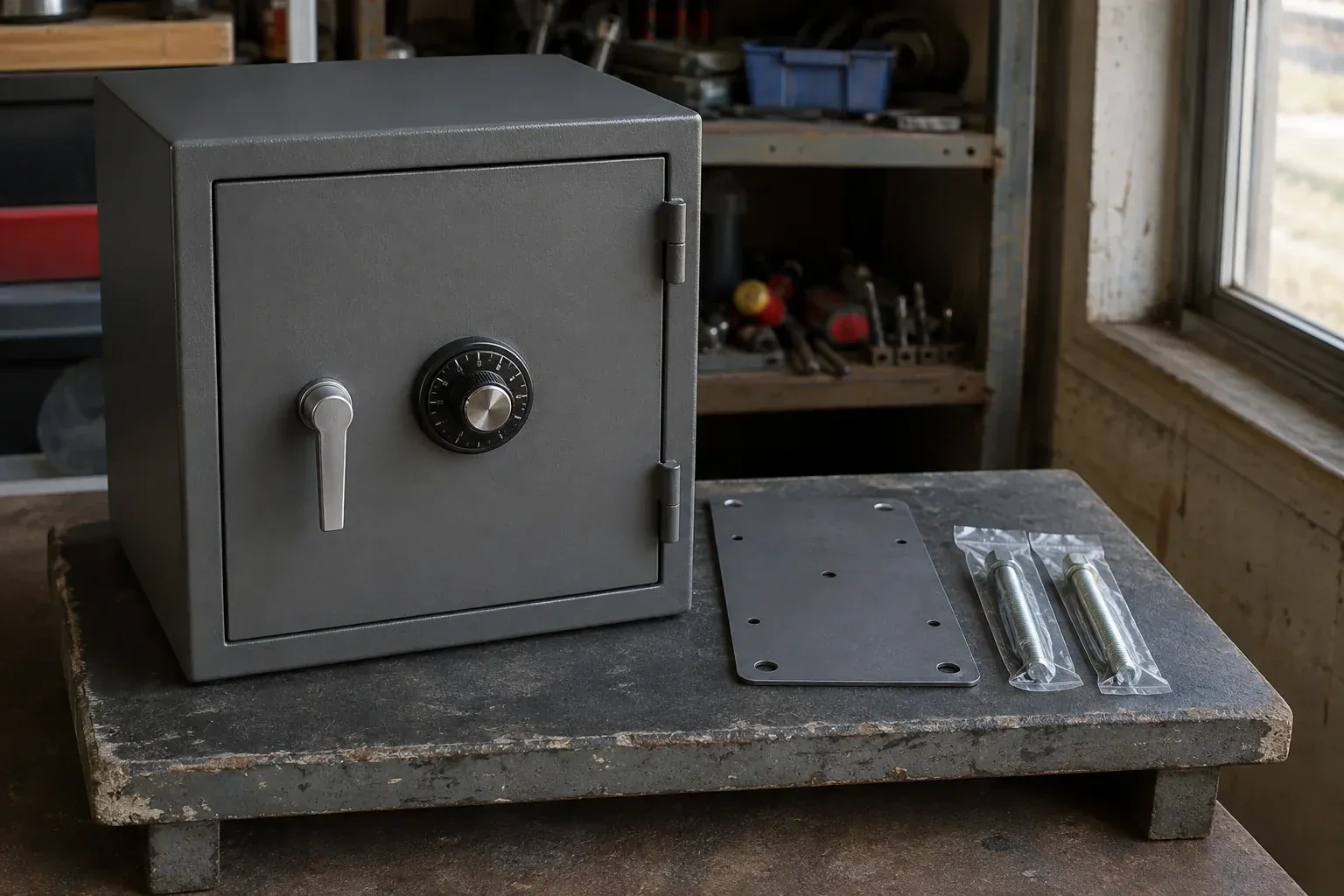
- The new manager took over the shop last month and only now needs the back-office safe open, but the combination the previous owner was supposed to leave in writing never turned up anywhere in the handover file.
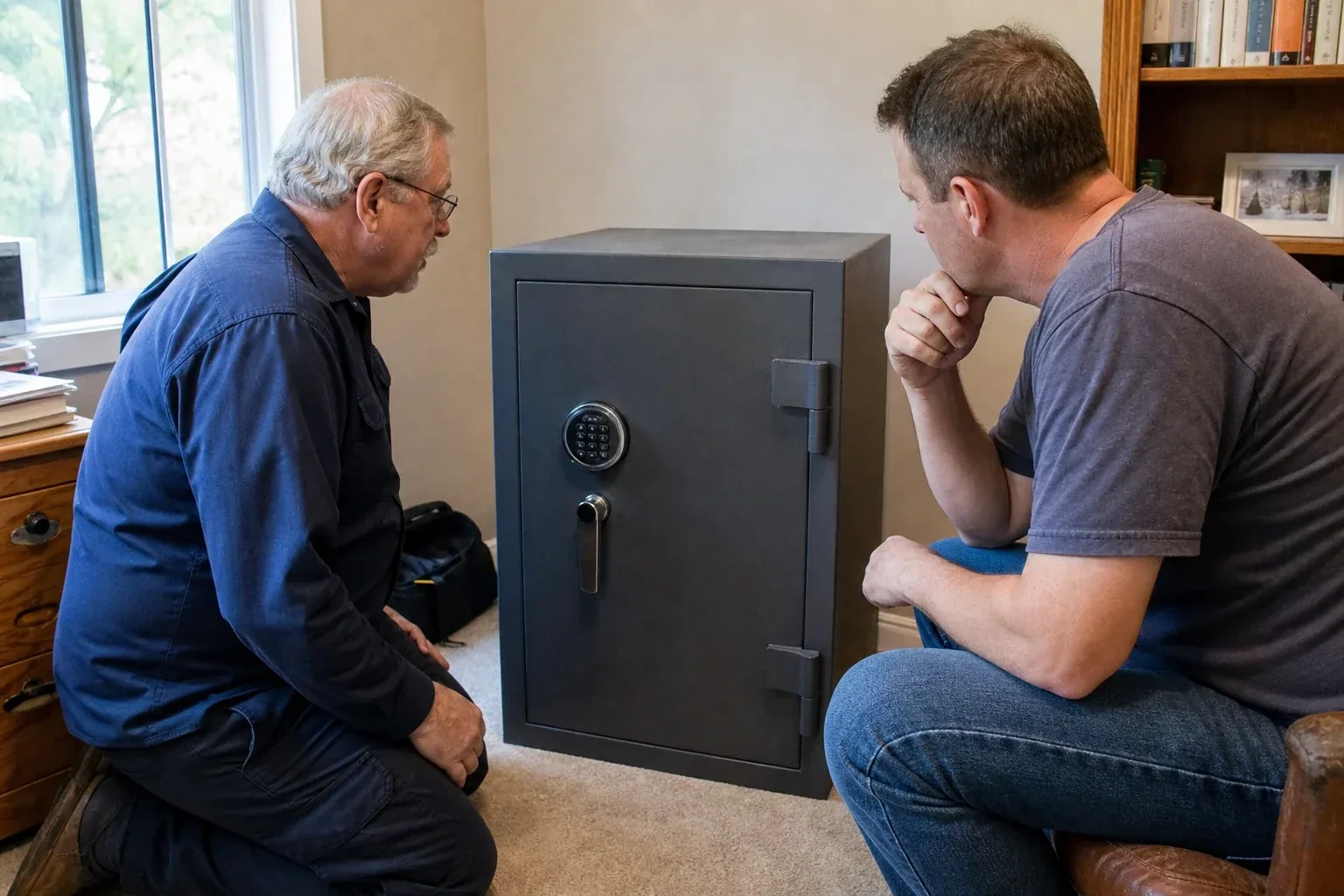
A customer's rifle safe at the range has a dial that simply will not respond to the combination written on the sales receipt from years ago.
Changing a combination is not only for a safe that has stopped opening. Businesses routinely have a working safe recombined the moment someone who knew the old code leaves, retires or changes roles, because a combination known outside the current staff is a loose end worth closing on its own. The visit is short when the safe already opens fine: confirm authority, dial or key in the old combination, set a new one, and test it before anyone signs off on the work.
Sound familiar?Dorset Park
Safe Opening & Combination Change · Dorset Park
Scene 1
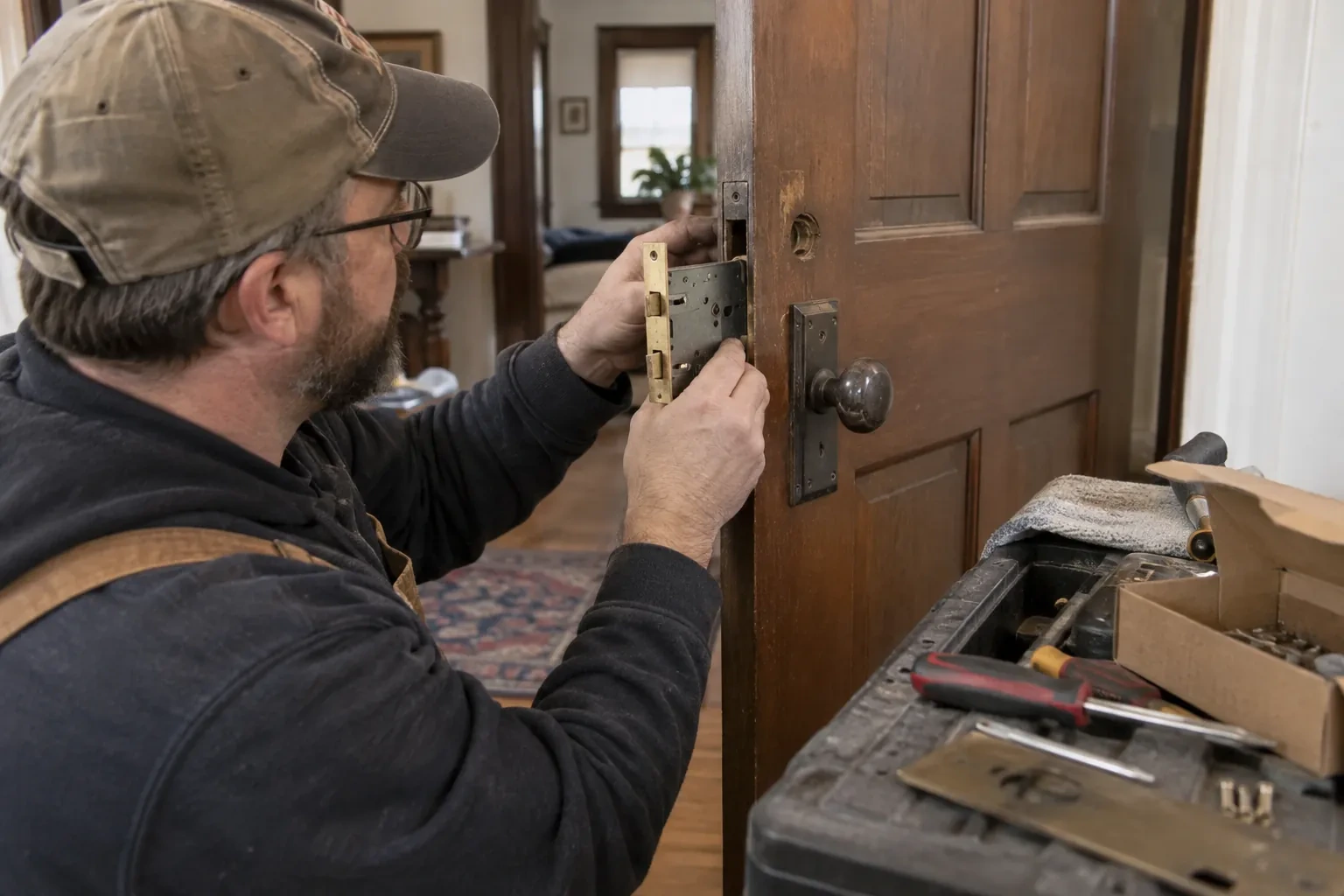
Before any tool touches the safe, the locksmith establishes who has the right to be inside it. For a business this is usually straightforward: an owner, manager or authorized employee identifies themselves and their connection to the account. For an estate, a secondhand purchase or a change of ownership, proof such as a bill of sale, a property transfer or an executor's documentation fills the same role. This step is treated as routine good practice rather than an obstacle, because it protects the current owner from a later dispute over who authorized access to a safe's contents just as much as it protects anyone else with an interest in it.
Scene 2
When the combination or code is correct but the door still will not move, the problem sits in the bolt work rather than the lock. The locksmith traces the linkage between the lock and the bolts, looking for a tripped relocker, corrosion, or a bent part from an earlier impact, and works to free or bypass the specific point that is jammed. This sometimes means accessing the mechanism from the back or side of the safe rather than through the lock face at all. Once the bolts move freely again, the lock itself is tested separately to confirm it was never the actual fault.
Scene 3
Most safes that needed a reset today will need one again eventually, whether from a future staff change, a forgotten code, or simple wear on an aging lock. Deciding now who is responsible for passing the combination along when roles change, keeping a written record somewhere secure, and having the safe's model and service history noted somewhere accessible all make the next visit shorter and simpler than this one. None of this is required before the locksmith leaves, but a few minutes spent on it now is the difference between a short reset next time and starting from an unknown safe all over again.
What shapes the quotePeru Lock Services
FeesSame any hour
The opening and combination work proceed the same way regardless of how the safe is mounted; access to the lock face, dial or keypad is what matters, not whether the case itself can be moved. A built-in or bolted safe simply means the locksmith works around its fixed position rather than moving it to a more convenient spot.
Yes. The locksmith identifies the safe directly from its hardware, brand plate if one survives, and physical layout, then proceeds with the same manipulation, decoding or reset options used on any safe with an unknown history. Documentation such as a will, an executor's letter or a property transfer establishes your authority to have it opened.
Yes, the opening itself proceeds the same way as for any other safe. Afterward, for a business, it is worth confirming the storage arrangement still meets the applicable federal requirements for secure firearms storage, since those cover the container, the surrounding room and who has access, separately from whatever caused the lock to need attention.
HaltonOntario
Every square is one home in a hundred.
On-site assessment
A customer's rifle safe at the range has a dial that simply will not respond to the combination written on the sales receipt from years ago.
(289) 630-2866, open 24/7.
On-site assessment preferred · (289) 630-2866, open 24/7