Skip to content
PeruLock ServicesOpen 24/7 (289) 630-2866
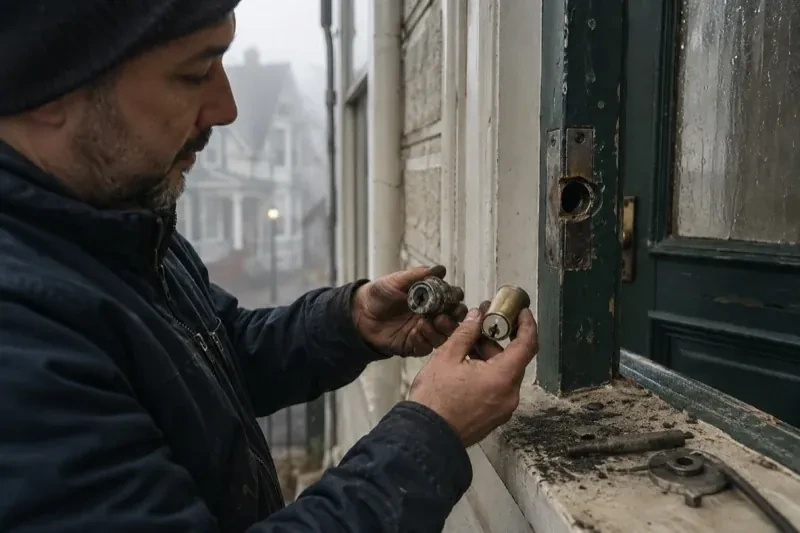
Person holding two lock cylinders beside an open painted door, with loose hardware and debris on the sill. — Seized & Jammed Lock Opening, Peru

Lockouts · Peru

Seized & Jammed Lock Opening

The key turns a full circle without any resistance and the deadbolt stays exactly where it is. There is no click, nothing moves behind the face of the lock, and the door is as closed as it was before you touched it.

In plain words

When the cylinder is the part that has seized, the work is about cleaning rather than force. Keyways collect dust, salt spray, metal filings and residue from sprays never meant for locks, and over time the pins stop lifting cleanly. The locksmith flushes the plug with a contact cleaner, applies a penetrating lubricant, and works the key in small movements until the plug turns. With the door open the cylinder comes out, is stripped and cleaned, gets fresh springs or pins where worn, and is dressed with the lubricant specified for that cylinder. A plug or shell that is worn, damaged or eaten through by corrosion is what gets replaced.

Sound familiar?Peru

The call
The key slides all the way in, exactly as it has for years, and then refuses to turn in either direction. Yesterday it needed a small wiggle. This morning it feels set in concrete, and pushing harder only makes the key flex.
NextHow the visit goes

Seized & Jammed Lock Opening · Peru

How the visit goes

Illustrative locksmith scene — Peru
  1. Scene 1

    Levers, thumb-turns and mortise cases

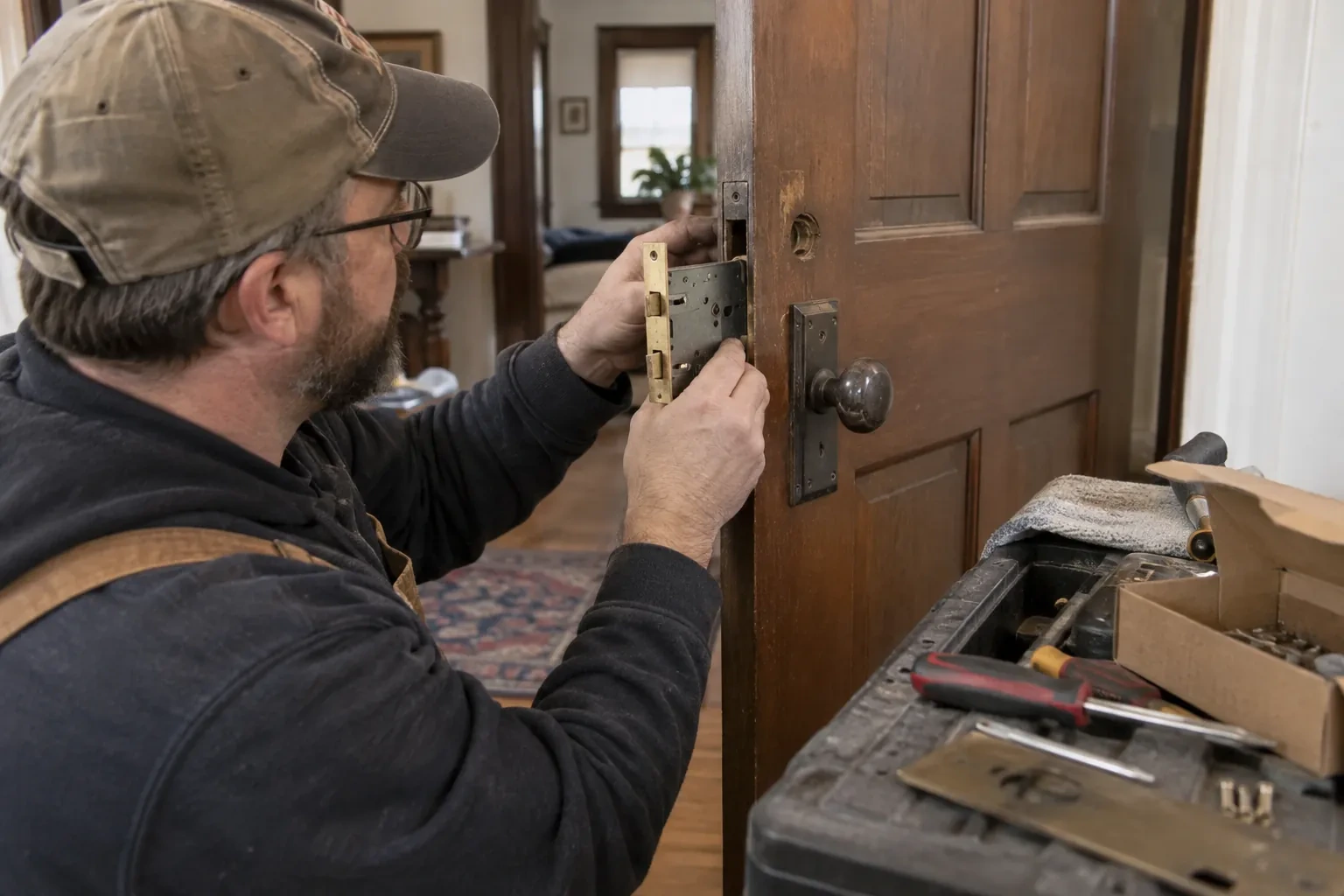
    Lever handles and mortise locks add parts that a plain deadbolt does not have, and each can jam on its own. A lever that drops without retracting the latch can have a tired return spring or a worn hub inside the case, though latch engagement, linkage, or the spindle can produce the same symptom. A thumb-turn that will not move can be a bent spindle, a stripped drive or a bolt pinned by the frame. On older houses and commercial doors the mortise case itself may be packed with decades of dust and dried grease. The locksmith works the lever, key and thumb-turn separately and feels where resistance starts, which locates the fault before the case is opened.

  2. Scene 2

    Freeing a seized cylinder without forcing it

    A plug that will not turn is coaxed, not wrenched. The locksmith flushes the keyway with an electronic contact cleaner to lift out grit and old residue, then applies a penetrating lubricant sparingly, since too much simply carries dirt deeper. The key is worked in small movements, in and out and a few degrees each way, letting the pins settle back into their stacks. If the cylinder cap has loosened, it is snugged so the plug sits square. As the plug begins to move, tension is kept light so nothing inside is bent. Once the door is open, the cylinder is removed for proper cleaning rather than left with lubricant masking the wear.

  3. Scene 3

    For a business: a door the staff can rely on

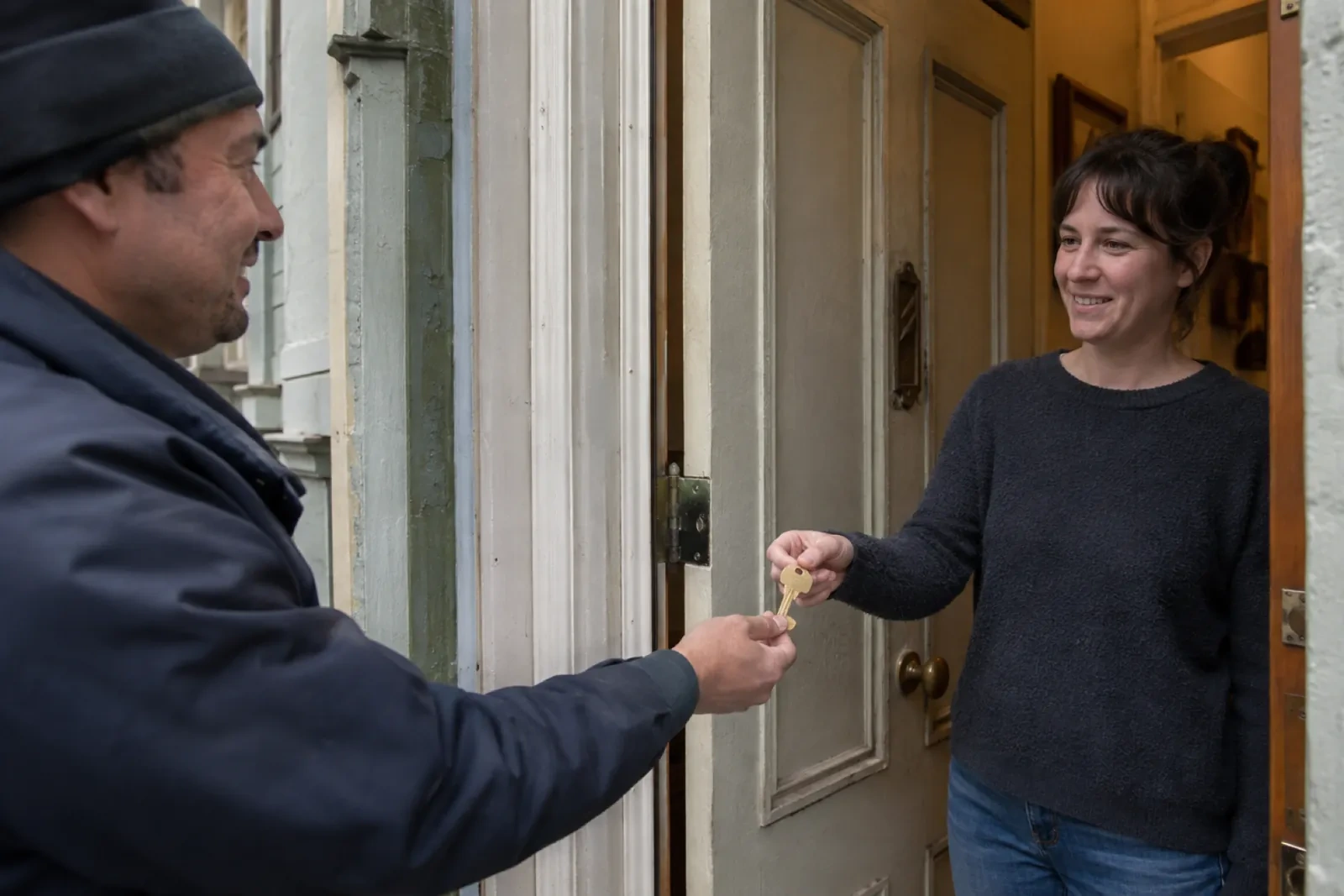
    On a commercial door the handover includes the people who use it. Whoever opens in the morning is shown how the lever, key and cylinder now behave, and the exit side is demonstrated so everyone knows the door opens from inside with one motion. If the mortise case was serviced, the parts that were replaced are named so a future locksmith knows what is in there. A note of which keys were tested and who holds them supports whatever key control the business runs. Spare keys are checked in the lock before they go back in the safe.

In the van

  • Replacement cylinder
  • Plug follower and repinning kit
  • Key blanks and code cutter
  • Dry PTFE or graphite lock lubricant
  • Lock de-icer

What shapes the quotePeru Lock Services

Upgrades you choose on the spot
A keyhole cover, a storm door latch, a reinforced strike or a new deadbolt are optional extras some people add while the locksmith is there, each shown as its own line.
Ice and salt on the day
A cylinder frozen solid or crusted with salt needs thawing, flushing and drying before it can even be diagnosed, and a winter call is quoted with that time in mind.
Small parts behind the cylinder
Tailpieces, cams, springs, cylinder caps and pins are minor items, but each one used is named on the quote so you can see what went into the lock.

FeesSame any hour

Have it ready

Before you call · 0 / 3

(289) 630-2866

Questions we hear most

My key is worn. Would a new copy have prevented this?

Possibly, if the key was part of the cause. A worn or bent key lifts the pins short of the shear line, so the plug binds even in a healthy cylinder, and a copy made from that key repeats the wear. A key cut from the code or from a crisp original is the fix. If the lock was also gritty or the door had moved, the new key would have eased things without settling them, which is why the locksmith checks all three.

Why does the lock only stick when the door is closed?

Because with the door open the bolt is throwing into thin air, and with the door closed it is throwing into a pocket that has moved. A door that has dropped on its hinges, swollen with humidity or been pushed out by thick weatherstripping lands the bolt against the edge of the strike plate instead of through the hole. A chalk mark on the bolt shows exactly where it hits, and the fix is on the frame, not in the cylinder.

My key turns all the way round but the bolt stays put. What has broken?

The key and cylinder are doing their job; the bar behind the cylinder that drives the bolt, called the tailpiece or cam, has broken, slipped or twisted out of engagement. It is a small part. The locksmith retracts the bolt through the mechanism or removes the cylinder to reach it, then fits a tailpiece of the right length and profile. Your cylinder and keys are unchanged afterwards.

Peruinformation

HaltonOntario

Seized & Jammed Lock Opening · Milton, Dorset Park

Town
Peru, Halton
In business
20 years
Hours
Open 24/7
Nights, weekends and holidays, same fees
Visits
On-site assessment preferred. Request a visit or call.

2021 census: what it means at the door

Every square is one home in a hundred.

  • 19 in 100 homes · newer homes
  • About 19% of homes in Milton were built in 1980 or earlier, according to the 2021 Census.Builders often key an entire street to a small number of keyways, which is convenient for them and less so for owners afterwards. In newer areas a locksmith can move a household onto a keyway that is genuinely its own.
  • Single-detached houses make up about 57% of homes in Milton (2021 Census).In areas of mixed housing, landlords may own a house here and a few units there. A locksmith can put all of it under one master system so the owner carries one key while each tenant's key opens only their own door.

Source: Statistics Canada, Census Profile

Open Peru in Google Maps

On-site assessment

Request a visit.

The key turns a full circle without any resistance and the deadbolt stays exactly where it is.

(289) 630-2866, open 24/7.